An account towards a better understanding of reincarnation
Autor: D. Harald Alke
A standpoint, not a lexicon entry. A personal experiential account by D. Harald Alke – worldview-based, not a healing procedure. Neutral background knowledge: the lexicon entry Reincarnation.
I understand reincarnation not as a scientifically proven fact, but as a personal, worldview-based view: while other people choose the way outward (astronautics, archaeology and the like), I have chosen for myself the way inward. From my point of view, if one follows the axiom of equivalence of Hermeticism – “as within, so without” and “as above, so below” – and admits reincarnation as an assumption, one can develop a holistic view of the nature of the human being, of their origin and of the emergence of life. This article is my subjective experiential account, not a proof.
What is this account about?
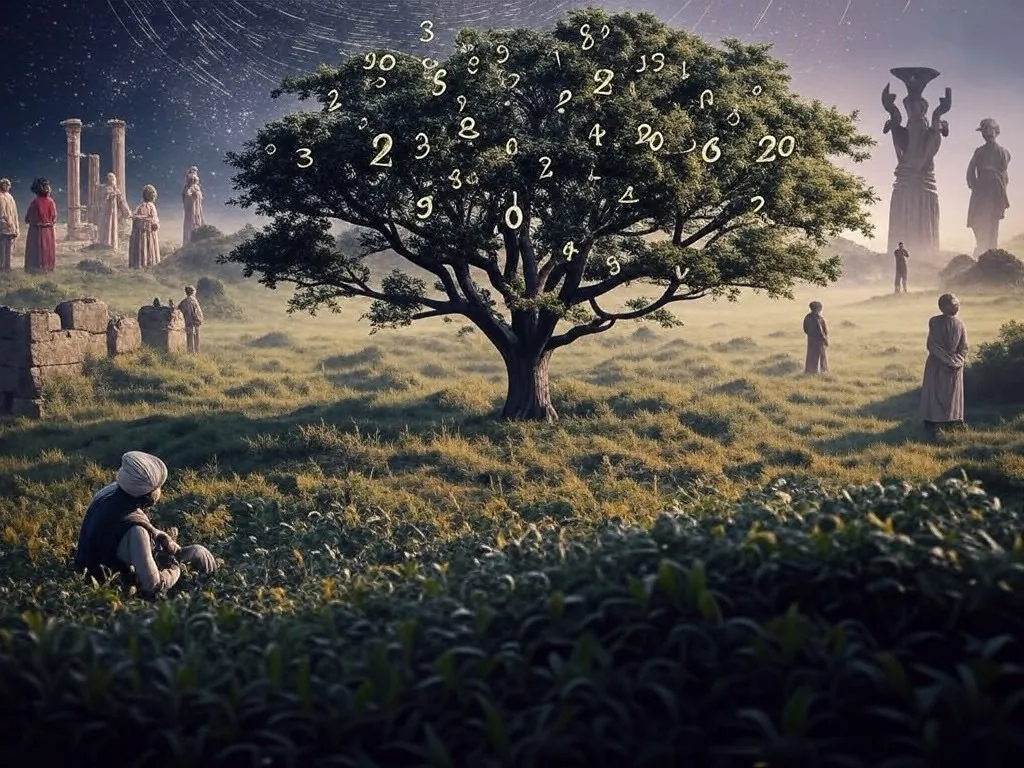 AI illustration
I describe here my own experiences and my reading of them – not established research findings. I believe that we may develop and use the mental powers that nature has given us. In my experience it differs greatly from person to person how easily someone overcomes inner barriers and lets their own consciousness enter into memories of earlier lives. That is my personal view; it cannot be objectively demonstrated.
Some of my experiences also touch on conceptions of parallel universes, of “breaks” in the continuum, or of time as a changeable medium. I understand this expressly as a pictorial, spiritual reading of my inner experiences – not as a physically demonstrated statement about the world.
How do I see karma and memory?
When, from my point of view, one’s own energy rises, impressions sometimes become conscious that I read as memories from earlier incarnations. Whether they actually are that, I cannot prove; I experience them so. In various phases of my recollections I had, for example, the impression of briefly speaking a foreign language or recognising old written characters. I render this as subjective experience.
The causes of decisive events I often assign, for myself, to karma – the “fate brought about by our own action”. Somewhat more freely rendered: “everyone is the architect of their own fortune”. That is a worldview-based pattern of interpretation that creates meaning for me, not a proven law.
How do I understand body, soul and spirit?
In my image of the human being, the human consists of body, soul and spirit. The body I understand as a vehicle and instrument in the material world. The soul I read as a subtle body that arises together with the embryo, is the seat of our emotions and dissolves after death. The spirit I understand as an independent, self-aware form of life that, in my conception, continues on. That is a spiritual view, not a natural-scientific model.
What does this have to do with regressions?
Some people seek regressions or memory work in order to understand personal themes better. From my point of view, engagement with the thought of reincarnation can enrich one’s own consciousness and feeling for life. I understand it as a way of self-experience and of the search for meaning – not as a healing procedure and not as a substitute for medical or psychotherapeutic treatment.
I would like to emphasise expressly: a regression or spiritual method heals no illness. If someone suffers from mental or physical complaints, that belongs in professional hands. Please discuss health questions with your doctor and do not discontinue anything on your own initiative. My own experiential account, for instance on the subject of the respiratory tract, is precisely that: a subjective experience that I felt so – not a proof of effect and not a recommendation to replace medical treatment.
How do I place this in the history of thought?
Reincarnation was long little present in European, Christian-shaped culture. In the non-Christian cultures of Asia, among Hindus and Buddhists, the idea of the transmigration of souls is, by contrast, long widespread. Thinkers of antiquity too, such as Pythagoras, Plato and Origen, as well as modern philosophers such as Goethe, Kant and Schopenhauer, have concerned themselves with related questions. That does not prove the idea – it shows only that the question has always occupied people.
C. G. Jung too gave much room to dreams and inner images; that is why a thought of his stands, for me, at the beginning of these reflections. Such references I render with reserve: they mirror interest and engagement, not a proof of reincarnation.
What would I like to prompt?
I would like to invite you to regard the theme openly and with curiosity – as a personal search for meaning, not as an established truth. Whoever descends into the “hidden chambers” of their own subconscious should deal mindfully with the images and feelings that arise in doing so. I experience such recollections like a film that one watches: sometimes stirring, sometimes liberating.
My concern is not to prove something, but to share a view. Perhaps it prompts you to think further about your own questions of origin, meaning and inner experience.
Note: This article renders a personal, worldview-based view and is not medical advice. It replaces no medical diagnosis or treatment. For health questions please turn to a doctor or pharmacy; do not discontinue prescribed medication on your own initiative.
© dha / Kyborg Institute
Frequently asked questions
Is this account scientific reincarnation research?
No. It is a personal experiential account by D. Harald Alke and his worldview-based reading – not a proof and not a scientific study.
Can a regression heal illnesses?
No. Regression and spiritual methods are ways of self-experience, not a healing procedure. In the case of health complaints, please consult a doctor and do not discontinue prescribed medication on your own initiative.
How does the Kyborg Institute understand body, soul and spirit?
The body as a vehicle in the material world, the soul as a subtle, perishable body, the spirit as an independent, continuing form of life. A spiritual view, not a natural-scientific model.